For your enjoyment!
Wednesday, November 10, 2010

Monday, November 8, 2010
Monday Class!!
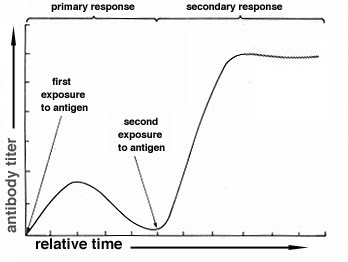 Primary and Secondary Response
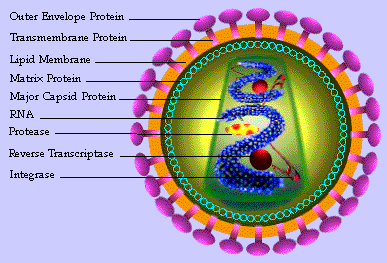
HIV Virus
In class:
At the beginning of class, we turned in UP page 32, UP pages 37-42, and your postcard. Then we went over Primary and Secondary response which had to do with the picture that was on Yvette's post and also shown above. The main difference between the two is that Secondary response uses memory B-cells and it allows it to produce more quickly.
Then we completed the immune system tree map by taking notes on Acquired Immunity. There are two types of Acquired Immunity which are active, and passive. Active immunity is when your body makes the antibodies. An example of this would be a vaccine or a exposure to the disease. Passive immunity is when your antibodies are obtained passively. An example of this would be by breast milk or a injection of antibodies. Active immunity has longer lasting memory cells when passive immunity is more temporary.
Afterwards, we took notes Immune system disorders such as Allergies, Autoimmune Diseases, Immunodeficiency Disease, and the HIV virus.
Allergies are overreactions of the immune system that produces mast cells to produce histamines. The histamines are chemicals which increase the blood flow and your fluid production such as tears and mucus. They also signal inflammation.
Autoimmune Diseases is when your immune system mistakenly attacks its own cells. Some examples of this is type one diabetes,Rheumatoid Arthritis, and Multiple Sclerosis.
The Immunodeficiency Disease is caused by the HIV virus. One of the most commonly known Immunodeficiency Diseases is AIDS. The HIV virus and the AIDS virus is transmitted through blood or body fluids. HIV is detected with the presence of HIV antibodies and it causes the helper T-cells to be unable to activate the B-cells and T-cells which result in the inability to fight off the disease. The HIV virus is very sneaky and it uses RNA to produce DNA which is commonly known as a retrovirus. This virus is so problematic because it invades defenses of the immune system and destroys your helper T-cells. Your helper T-cells tell the other cells what to do and without them, your cells wouldn't know what to do. In class we watched a animation on the production of the HIV virus and Mrs. Stein put the video on moodle.
Mrs. Stein asked the class for questions they had on the test. For question 5 on the objective sheet, you don't need to know any of the diseases that we didn't talk about and be familiar with the pathogens for the diseases we did talk about. She will be having a review session tomorrow morning and everyone is welcome!
At the end of the class, we watched a movie on bird flu which was spread from bird to bird by their poop. This is not a major problem in humans today but may develop as a serious problem in the future.
Homework:
STUDY FOR THE TEST TOMORROW!!!! (Optional study session tomorrow morning with Mrs. Stein!)
READ SECTION 35.4
P.S. I HOPE YOU FEEL BETTER MRS.STEIN!! (She lost her voice and wasn't feeling so well :( )
The next scribe is Bridget!!
Sunday, November 7, 2010
It's FRIDAY!
In Class:
D.O.D #7; Lyme Disease
Agent of Disease:
bacteria
Facts:
- Vector of Lyme Disease are ticks.
- Bacteria is from the bite.
-If bit by a tick, it is likely to have a rash forming on the side of the bite.


Antibodies:
-antibodies bind to antigens
-antibodies mark antigens for destruction by the macrophages
- very specific
- person's body can produce 10 billion antibodies.
Immunological Memory:

2nd exposure is a lot higher and faster because memory B-cells remembered how the antibodies looked in the 1st exposure.
Cell-mediated Immunity
- T-cells attack body cells that are cancerous or infected with viruses.
- Helper t-cells signal(stimulate) killer t-cells and memory b-cells.
- Killer t-cells (cytotoxic) kill infected cells or foreign tissue.
HINT! :
If you're having trouble with this material or do not understand something, go on MOODLE. There, you will find a couple of videos that Mrs. Stein has posted up in order to help you out and give you a better idea of the material we are learning.
HOMEWORK:
- Looked over Michael Dillon's AMAZING scribe post and the Star/Wish.
Went over:
- DOD #7; talked about Lyme disease.
- DOD #7; talked about Lyme disease.
- UP 22-25 and Up 28-31.
- Immune System tree map. (Specific Diseases)
- Immune System tree map. (Specific Diseases)
- Took notes about Hummoral Immunity, Antibodies, and Immunological Memory.
D.O.D #7; Lyme Disease
Agent of Disease:
bacteria
Facts:
- Vector of Lyme Disease are ticks.
- Bacteria is from the bite.
-If bit by a tick, it is likely to have a rash forming on the side of the bite.
Notes:
Hummoral Immunity
B-Lymphocytes (B-cells) also known as white body cells: recognize antigens which are present on pathogens.
B-cells produce plasma cells and memory B-cells.
Plasma cells release antibodies.
Memory B-cells remember the antigen so antibodies will be produced rapidly next time.

Antigens: markers on a cell's surface that indicate what the cell is about.
B-cells produce plasma cells and memory B-cells.
Plasma cells release antibodies.
Memory B-cells remember the antigen so antibodies will be produced rapidly next time.

Antigens: markers on a cell's surface that indicate what the cell is about.
Antibodies:
-antibodies bind to antigens
-antibodies mark antigens for destruction by the macrophages
- very specific
- person's body can produce 10 billion antibodies.
Immunological Memory:

2nd exposure is a lot higher and faster because memory B-cells remembered how the antibodies looked in the 1st exposure.
Cell-mediated Immunity
- T-cells attack body cells that are cancerous or infected with viruses.
- Helper t-cells signal(stimulate) killer t-cells and memory b-cells.
- Killer t-cells (cytotoxic) kill infected cells or foreign tissue.
HINT! :
If you're having trouble with this material or do not understand something, go on MOODLE. There, you will find a couple of videos that Mrs. Stein has posted up in order to help you out and give you a better idea of the material we are learning.
HOMEWORK:
- Postcard due Monday.
- UP pg 32 due Monday.
- UP pg. 37-42 due Monday.
- Read 35.4 by Tuesday.
- Homework Pass available before Wednesday.
(look over notes, diagrams, labs, and textbook pages)
next scribe is Tara
Thursday, November 4, 2010
Bio Day
Today we were in the auditorium for Bio Day watching a documentary called the Rise of the Super Bug. This documentary is important because it shows us just how lucky we are to have medicines to help prevent death. Surprisingly enough, before the twentieth century there weren't any medicines. This was especially difficult during wars before medicine since there were so many infectious diseases that led to a ton of deaths throughout the wars. The discovery of the first medicine, Penicilan, by Alexander flemming is one of the most important discoveries ever. Penicilan antibiotics were very important because these is the first drugs that were effective against serious diseases. Rise of the Super Bug showcases some of the world's most deadly infectious diseases such as Tuberculosis. Tuberculosis is an example of a disease that can be resisitant to some of our best antibiotics. When will we find a way to stop these Super Bugs and how long will it take????
Yvette will be the next scribe
Yvette will be the next scribe
Wednesday, 11/3/10
To start off the day we got our homework stampsheets stamped for doing pages 22-25 (RX for survival Rise of the superbugs) in the unit packet and for also doing our "immune system" tree maps.
After we had our homework checked in we moved onto the disease of the day.
D.O.D #7: Pneumonia
- Bacteria, virus, fungi
- Endemic
- Transmitted through casual contact; saliva, mucus
- Inflammation of the lung often resulting in air sacs filling with liquid
- Treated with antibiotics and antimicrobials for bacteria and fungi
- Prevented with vaccine and living in low population density
- Often connected with the Influenza infection
- 1 to 3 million deaths
Following the disease of the day we went over our immune system tree maps and Mrs. Stein showed us the correct way to have done the tree map *which can be seen in the attachment.*

The final thing we did in class was watch part of a Mythbusters episode. In the episode we saw how easy it is to spread your snot to other people through casual contact. Adam from the show throws a "party" and tries to get as much of his snot on his peers without them knowing. Adam, who had a common cold did common things such as shake his guests hands, pat them on the back, or cough without covering his mouth. From watching this episode we learned how easy it is to spread germs through casual contact, things we do every day. In the end of the episode one of the guests at the party went under a specific type of light which revealed Adam's snot. She had her hands and some of her arms covered in it without even knowing! Although it was a gross and cruel experiment it did teach us a lesson.
HOMEWORK: Up 28-31 (Fri.)
Postcard (11/8)
Don't Forget: *Bio day tom. (auditorium) ***Test (11/9)
Tuesday, November 2, 2010
Terrible Tuesday.

In Class:
- Handed in UP 15-18 (Bacteria labs)
- Star/ wish/ attendance
- D.O.D- Tuberculosis
- Discussed antibiotic resistance
- Began UP 22-25
Homework:
- UP 22-25
- Immune system tree map (35.2 and first page of 35.3)- Tomorrow
- Postcard- 11/8
- Test- 11/9
Notes:
Antibiotic Resistance*Reasons for this can be mutation, conjugation, or NATURAL SELECTION
*The more antibiotics you use, the less effective they will be
Disease of the Day:
Tuberculosis-Causes bad lung infection
-Spreads through the air (Airborne)
-Affects lungs the most, then spreads throughout the body
THE NEXT SCRIBE WOULD BE MICHEAL D. BUT SINCE HE'S NOT GOING TO BE AT SCHOOL TOMORROW THEN...IT WILL BE JOSE A. JOSE CAN YOU MAKE MICHEAL THE NEXT SCRIBE AFTER YOU? K THANKS. :)
Monday, November 1, 2010
Mashni Monday's
 REASON FOR TITLE: well they both started with "m" so what the hay, why not.
IN CLASS TODAY: We finished our lab with bacterium and how they grow and antibiotics effect on growth of brothculture of peppercorn bacteria (what a gross name for a bacteria). Anyway, everyone got there plates back after being in an incubator for 24 hours. We wrote down our results and counted the bacteria colonies we found in the dish of various bacteria we collected around the school.
Picture above
My groups results were:
Section 1: Cafeteria 22 bacterial colonies
Section 2: Railing 30 bacterial colonies
Section 3: Toilet No bacterial colonies P.S section 3 and 4might have been switched
Section 4: Control 106 bacterial colonies (maybe even more but there were so many!)
In our next lab, we looked at the effects of antibiotics and how they prevent the growth of bacteria. In our petri dish, we spread the broth culture of peppercorn bacteria, and placed 4 paper disks in sections on the dish. 3 paper disc contain an antibiotic and one without for a control. Each petri dish was placed in an incubator for 24 hours, and we got our disk back to
record the ZONE OF INHIBITION (DunDunDUNNNN) [it sounds evil...]
PICTURE:

Our next step is to measure the ZONE OF INHIBITION. The ZONE OF INHIBITION is the space around the antibiotic that has no bacteria, due to the antibiotic killing it. the bigger the space, the more effective the antibiotic is. Different antibiotics react differently to different bacterium. My groups results were:
Section 1: NB 30 22 mm
Section 2: Penicillin 7 mm
Section 3: C 30 33 mm
Section 4: control 0 mm
In the data collected, it was obvious that the control didn't do anything because it didn't have any bacteria on it. if i had to choose on an antibiotic to kill the broth culture i would choose C 30 because it had the largest ZONE OF INHIBITION so it is more effective.
ALSO: I had a few questions about antibiotics and i was told to wait until tomorrow(today) to ask them.
Numero uno: Are antibiotics alive? if not, then what are they made of?
Numero dos: Are they similar to how virus' work, except they attack bacteria?
Numero tres: How are they put into a capsule? and who invented/found antibiotics?
HOMEWORK:
read 35.2 and first page of 35.3 and do a tree map of the immune system (ON MOODLE)
NOTE: THIS IS THE HARDEST READING OF THE YEAR. MRS. STEIN SUGGEST GOING TO THE TLC FOR HELP.
post cards are due 11/8
OUR NEXT TEST IS IN A WEEK FROM TOMORROW! AND WHEN YOU READ THIS IT WILL BE A WEEK FROM TODAY! [[11/9]]
THE NEXT SCRIBE WILL BE.....
{drum roll please...}
ARIANA NUFIO!!!!!!
have fun, this took me a while.
Subscribe to:
Posts (Atom)